A few months ago the Austria Fulbright Commission told us about a week-long Fulbright EU-NATO seminar in Belgium and Luxembourg. They asked us to write proposals telling how we would benefit from attending if we were interested. Apparently I can write one hell of a proposal, because they picked me and a guy who is actually here to study the EU named Gergely to go.
The seminar was a few weeks ago. It was intense. We had "briefings" (sounds so serious, I know) every day from 8-4 or 5 at various EU and NATO institutions, which didn't leave us with much free time. It was also intense because most of the people who attended it, who were Fulbrighters from almost all of the countries that are members of EU and/or NATO, studied Poli Sci or Econ and were "on" all the time. They would seriously forgo food and sleep for a chance to debate the political and economic implications of Angela Merkel's choice in footwear. I am not like these people.
Fortunately, they all turned out to be REALLY nice and fun, and there were also plenty of people who study other things. My roommate for the week Allie for example studies Bio-E toxicology in Norway. In the picture above in the Grote Markt (which is beautiful) four of the guys study Econ, but the other two are doing Sociology and Anthropology projects about immigration.
In the free hours we had at night we managed to enjoy plenty of these:
(my personal favorite is topped with cherries, chocolate, and whipped cream)
Followed by plenty of these:

(After careful and thorough taste testing I can say that I prefer Chimay Blue)

Such gluttony was made possible by the fact that we received a 175 Euro per Diem to cover seven meals. Even in Brussels, which is fairly expensive, you can eat for way less than 25 Euro per meal. Lunch was provided every day and was just like European Studies, where we would get three courses and dessert was always delicious. Belgium is famous for its french fries, too, and a few bowls were served with every meal at every table. French fries are also drunk food and you can buy them from carts late at night. Europeans eat them with mayonnaise. Bleh.

I shouldn't make light of all that I learned, though, because the briefings were mostly really interesting and informative. We started at the European Court of Justice in Luxembourg (sort of like the Supreme Court), whose towers are designed to look like shelves full of books and documents, celebrating a "long tradition of justice." These towers are supposed to be gold but are really that awful 70s mustard-yellow color that polyester suits were often made of. The color looks even worse in bad weather, which we had all week (the picture below of from google). During a briefing with Judge Lanaerts (who seemed like a celebrity to me because Joel and I saw this picture of him on Wikipedia while I was frantically trying to learn something, anything about the EU before I left) we started learning about the "supra-national" character of the EU, meaning that the EU doesn't seek to create a new nationality, but rather to transcend the nationalities of all the member states. This was what I found most interesting. All the court proceedings are conducted via translators in the 23 languages of the 27 member states, and rulings are available in each of the languages. Cases are brought to the Court of Justice by groups or individuals when a country has violated the terms and conditions of membership.
As a point of reference, here's a map of EU member states:

Throughout the course of the week I also learned what all the other branches of EU government do, which is a feat in itself. The Commission drafts legislation, while the Parliament, made up of elected officials, and the Council, made up of the leaders of the member states, pass the legislation and make important decisions. Parliament is huge (736 members!) and the entire EU seems very bureaucratic (Europeans seem to like bureaucracy- evidenced by the fact that I had to talk to three different people to change one number on my matriculation form). We also met the ambassadors of Luxembourg (she reminded me of the type of Sewanee mom who would have a cocktail before breakfast and liked to hang out at frats) and the US Mission to the EU (who seriously looked JUST like Obama) and got lots of freebies (pens, notepads, bookmarks). Best of all I now understand things like:
1) Turkey will not be let into the EU any time soon not so much because it is Muslim, but because it doesn't recognize the sovereignty of the president of Cyprus (and Cyprus is a member state), and because it is so big that its membership would tip the balance of power from Germany-France to Turkey.
2) Greece isn't the only country in serious debt and lots of other countries hid outstanding loans in order to join. Greece is just the only country it's backfired on so far.
3) Sweden is not on the Euro just because the have a strong currency and didn't want to be (they're actually supposed to join), but because they purposely fail to meet the criteria for joining with some little detail or through some sort of loophole every chance they get. Sneaky Swedes.
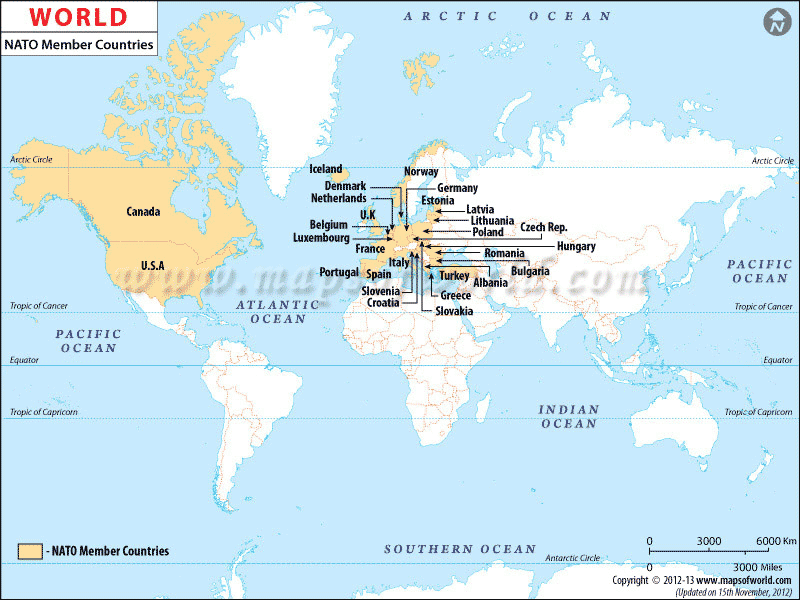
At NATO and SHAPE (NATO's military base) I learned that Austria is not a member of NATO (who knew?), they are redesigning their "Strategic Conept" (military speak for mission statement), and that NATO has a gift shop- where I bought Andrew's birthday present-, but I was most interested by how different the atmosphere was in these places compared to how it was in the government buildings. The government buildings were very open and mostly glass to emphasize transparency, but here the architecture was very rectangular and boxed in. The people who led the briefings were completely different in the demeanor and language, too. At the governmental institutions we had talked to a lot of diplomats who had long and fluffy answers for most questions, but at NATO and SHAPE answers were direct and were delivered in bullet points. I have to say that SHAPE fed us one of the best lunches of the week, though.
And for those of you who are curious, here are the NATO member states:
I didn't take many pictures because we were told that cameras weren't allowed in the buildings we visited during the week.
On our last day we had a little extra free time so Gergely and I went to the Bozar art museum to see an exhibit on Frida Khalo. We both liked this painting the best:

It made sense that we would like it the best because the description said that it was one of her early, European-influenced paintings. So to keep from being too Euro-centric (I'm interested in other parts of the world, really!) I'll post another painting that I liked, which is a self-portrait of Kahlo portraying herself at St. Stephen and showing her body supported by a brace she had to wear after a bus accident and the crumbling pillar within her.


Brussels is a little rough around the edges (Let's Go warned that girls should beware of super-aggressive men) but I really like the city. It feels really alive and there are lots of fun sights, like the cathedral and the Mannekin Pis. Had I not been to Brussels two years ago with Catherine I would have been really disappointed that I didn't get to see more of the city because there are lots of fun sights, like the cathedral and the Mannekin Pis.
But luckily I have lots of fond memories like this, when Catherine (wearing my clothes because her luggage was MIA) and I went to the brewery museum that looked like a spaceship and got in free because the door was unlocked and no one seemed to be working. How could you not enjoy a city with good beer, great chocolate, awesome waffles, and unsupervised museums?
 A couple weeks ago I took advantage of a really beautiful day (the birds were singing, the sun was shining, children were laughing) to hike up to some castle ruins in a nearby village called Gösting.

 Running around the castle grounds with high-fructose fruit drinks in hand and no parental supervision in sight was a group of wild/really cute kids (substitute "discipline" for "parental supervision" and you have Austrian schools... more about that later). What made them REALLY Austrian, though, was the fact that the leader of the pack was wearing Lederhosen.