Thursday, April 8, 2010

And the Winner Is...

There are times when I really like my job. Really, really like my job.
Right after the Oscars I did a lesson with 3b (the same class I had Thanksgiving breakfast with) about the Academy Awards. We talked about the fashion, the celebrities, and the winners. Then we did a listening exercise about what the academy is and how voting works. Next, we had our own Academy Awards.

I made two categories of movies and assigned a pair of students to each category. Each pair had to write an acceptance speech in case their movie won, so I taught them phrases like, "I'd like to thank...", "A big thank you to...", and "I appreciate the support of...".

Then we voted (each student got one vote for each category) and the winners had to deliver their acceptance speeches.

I wasn't expecting much from the speeches because the kids seemed
1) to be really confused
2) to be writing some pretty interesting speeches... I answered vocabulary questions like, "Ay-mee-lee, what means 'Kaninchen' in Englisch?" (it's rabbit... to be fair I did tell them they could thank whomever they wanted)
3) to have poured Red Bull all over their cereal that morning

So I was completely surprised when I announced the first winner and they all clapped and cheered for the students who won, who actually looked excited and prepared.

Even better, their speeches were really good. I had expected something along the lines of, "Today thank I the dog Fluffy," but what I got were things like, "We'd like to thank our team for being the best team ever. We couldn't have done this without you!" and, "A big thank you to our editors for working so hard. We really appreciate all you did!" These kids are only in their third year of English, but they'd obviously seen an acceptance speech or two before.

After each speech the class would applaud again without even being prompted. I'm not sure whether they were ever really confused or if they just always look lost, but what started as chaos turned out to be almost as good as the lessons I did on Michael Jackson and the No Pants Subway Ride (Google it).

Sunday, March 28, 2010

Emily Lately

Here's are some things I've been doing lately:

1) Enjoying teaching. It's difficult to get up on Monday morning at 6 AM to be at school in time to teach the first lesson, but I really do like it. There are only two classes I dread going to, and I only have to go to each every two weeks.

I look forward to going to all the other classes. Most of the students are really nice and already speak pretty good English (even if it does sometimes still sound like nails scratching across a chalkboard when I hear my name pronounced "Ay-mee-lee"). Classes usually go pretty well because of this, but every once in a while I'll happen to teach about something they're really, really interested in and a lesson will go especially well. This happened when taught about Michael Jackson, defining terrorism, and last week, places with funny names.

I told them class 5c about American places like Idiotville, Oregon and then used an article from BBC about British towns and streets with names like "Crapstone" and "Butt Hole Road." It was an excellent vocabulary lesson and the students asked if they could have extra copies of the articles afterwards. If appealing to the tween-age sense of potty humor is what it takes for me to teach these kids an English word or two, then so be it.

And because I know Andrew at least is wondering where to find this article, here's the link:
http://www.nytimes.com/2009/01/23/world/europe/23crapstone.html?scp=1&sq=that%20road%20sign%20means%20something%20else&st=cse

There are two girls at the Gymnasium that are really, really sweet and invited me to go see Alice im Wunderland (yep, that's Alice in Wonderland auf Deutsch) with them. I've heard no-so-good things about it in English, but I think because I saw it in German and therefore wasn't paying as much attention to the dialogue as I was to the visuals that I enjoyed it more.


2) Giving private English lessons and making BANK.
I tutor the son of one of the teachers at the Fashion School who is 14. He has a rock band called "Metal of Wood" and a voice that cracks every other word. I also tutor a student from the Fashion School who gives Tupperware parties on the weekends to finance her singing lessons. And I give Business English lessons to a man named Helmut (he's the neighbor of a teacher at my roommate Zach's school and Zach didn't want to give lessons). I was a little nervous about doing Business English, but I just assign him articles from the New York Times, BBC, CNN, etc. to read every week and then we discuss them. He seems to be happy with the lessons because he and his wife have given me my OWN pair of houseshoes at their apartment and have invited me to go to the south of Styria, which is wine country, with them and a group of friends in a few weeks.


3) Taking courses at the university. I'm doing a German course (long over-due), a course about Vienna around 1900, Intercultural Communication, and the Political System of Austria in the Context of Europe. The German course is mostly conversation, so I'm slowly regaining some of the social skills I lost in the depths of winter.

4) Opening my windows. It's spring and it's WARM! Open windows are a luxury I'm trying to enjoy before I go back to the 406 (likewise I'm enjoying the facts that the TV and the hair dryer can be on at the same time and that multiple police cars aren't parked outside the apartment complex across the street every weekend).


5) Alternately counting down the days until I finish teaching (65) and making frantic lists of all the thing I want to do before I leave while panicking that I won't be able to do them. At the top of the short-list is taking a trip down to the Dalmatian coast in Croatia.
In the spirit all this panicking, for the past two weekends I've done some sight-seeing in Graz. I went to the Armory, which was surprisingly informative and interesting It was built in the 16th century and STILL houses 32,000 weapons and pieces of armor, including this suit for a horse, that were used to outfit Styrian militias. Graz's claim to fame is that this is the largest historical armory in the world (I've lived in very important places- A League of Their Own was filmed in Evansville). I also went to the Volkskunde Museum (like a museum of regional culture) and the Kunsthaus (the art museum, which is called the "friendly alien" because it looks like a spaceship and had an exhibit on capturing speed in art).
Today I took a walk around the old town and saw this guy, apparently a Turkish soldier, sticking out from under an awning. This was the highlight of my day.

Saturday, March 20, 2010

Next Time I'll Pack My Galoshes


According to google image search, Antwerp looks something like this:
Looks nice, doesn't it? Blue skies, beautiful buildings, people outside enjoying the sunshine.

False advertising, I say.

We had one free day during our time in Belgium, so some of us took a day trip to Antwerp. Our experience was more something like this:
 (disregard the fact that this is an image from a Texas tropical storm- a google image search of "torrential downpour" didn't yield anything dramatic enough)

After missing the train that the boys were on (when the alarm went off I told myself "5 more minutes" for about an hour) and running through the streets of Brussels to catch the next train, I was already soaked. Gergely had borrowed my umbrella earlier in the week and I hoped he had it with him in Antwerp.

Antwerp is only about 45 minutes from Belgium, and I was really excited to go because I heard they had a beautiful cathedral and large collection of paintings by the Flemish Primitives (who am I to pass up a good triptych?). The city seemed even more promising within the dry comfort of the train station, which is absolutely gorgeous. The women at the tourist office were really nice and helpful. They gave me three different maps and directions to the museum and the cathedral.

As soon as I stepped outside to go find the boys, though, the day lost its promise. It was not only raining hard and relentlessly, but it was also freezing. There were deep and unavoidable puddles everywhere and wind that somehow seemed to come from the ground up, blowing the rain and puddles into my face. I'm not sure that I've ever seen weather this miserable.

So I ducked into the first interesting building I could find, which happened to be the Diamond Museum. I went through the exhibits with the audio guide, which was informative but really long, and learned about the chemical composition, mining, and trade of diamonds (Antwerp is the Diamond Trade capital- more than half of all diamonds pass through here, which is why the city is wealthy enough to have a train station like that). There were plenty of pieces of jewelry on display that made my eyes light up and caused an "Ooooh pretty!" or two to escape me, like this peacock brooch:
 
But of course, noticeably absent was any mention of the violence and exploitation surrounding the diamond trade in Africa (there was one little blurb that said, "Diamond mining used to be dangerous."). Some things you just can't put a positive spin on.

After the Diamond Museum I decided to go meet up with the others and somehow ran into them in a subway station. They had apparently tried to get directions from the women at the tourist office, who both spoke great English, but were themselves unable to form coherent questions (instead of asking for a restaurant that served hamburgers, one of them gestured with his hands and said, "Bun, meat, bun!"). They had no idea where they were going and had apparently spent the last two hours at a place called "Boston Steak House." Luckily I had 3 maps.

The rest of the day was spent in the cathedral and the museum, running from awning to awning with our heads down to avoid the needles of rain (turns out Gergely forgot the umbrella). So I've included a picture of 4 of the 5 (George was the photographer) of us as we waited to get on a tram. Unlike in Austria the tram didn't smell like ham, but like a mixture of wet dog and gummy bears. I prefer ham.

As a result, I don't know what the buildings and streets of Antwerp look like. I did snap this one picture of the cathedral as we ran away, though, and this one of some windows in the interior.


The museum didn't have as large a collection as I expected but was warm and dry. Plus, we saw some great paintings, like this one by Jan van Eyck.

Despite the weather it was a fun day. We didn't stay any longer than necessary, though, because we all had boots, coats, and pants to go home and dry (my boots aren't tie-dyed, they're soaked). Consider yourselves all forewarned that February is monsoon season in Belgium.

In Bruges (celver, huh?)

Michelangelo!

Swans on canals!
 
WAFFLES!
  
We spent a day in Bruges for the official purpose of visiting the College of Europe, which offers masters degrees in "European Studies" (but should really be called "European Union Studies"). It was interesting, but as Maggie, the director of the Fulbright Commission in Belgium, said, it's a "quasi-academic institution" so I won't say much about it. 
I will say more about exploring Bruges, though, because it's one of my favorite cities (we went on European Studies, too) and this was one of only two days we had much free time. 
After lunch we went on a tour of the city, which looking at this picture I apparently listened to very intently.
 
We saw the cathedral with the only Michelangelo in Northern Europe, the beautiful Pieta above (that I also took blurry pictures of two years ago), the main square with its many different styles of architecture (Late Gothic, Renaissance, Baroque, Neo-Classical, and modern to name a few), the church that supposedly houses a vial of Christ's blood (a golden detail on this church's exterior is below), and I was reminded of a lot of the things I learned on Euro Studs, like the fact that the town hall (behind me in the "intent" picture) was the first secular building built in the Gothic style.
I like Bruges because most of the buildings are from the 14th and 15th century and are really well preserved. Canals wind through the city and swans (which are much bigger and scarier animals than you might think) float across them. There are chocolate and waffle shops on every corner. It's always full of tourists, but then again, I'm a tourist, so can I really complain?

Another highlight of the day was matching up people from the group with their Euro Studs and Sewanee doppelgängers. The girl in the picture to the right was 100% Ceci-she was REALLY nice and started conversations with sentences like "I like cheese." (the guy in the picture is Gergely, who lives in Vienna), there was a guy with Arijit's voice and mannerisms- I heard him speak and seriously turned around ready to ask what room he and Derek were staying in, and one of the journalists was what I imagine Prestia was like in his 20s- smart, well-dressed, and full of witty and snide comments and a geographical history that was impossible to unravel. I'm also pretty sure he owned a cravat.
This is unrelated, but there was also a girl that I couldn't talk to because 1) she was really loud and excited and I got tired just being around her and 2) she looked like the Cheshire Cat.

After the tour Gergely, Allison/Ceci, and I bought waffles and chocolate. But unlike the last time I went to Bruges I didn't have a hotel room sit in all day and watch 7th Heaven while eating the chocolates with Derek. 

Bruges also brought back other fond memories, like having close personal contact with Ceci during any sort of exchange,

and "borrowing" a wheel chair from the Musee des Beaux Arts on behalf of Alyssa and taking turns pushing each other through the streets of town. 

Sweet memories.

"Austria Is Not a Member of NATO" and Other Things I Learned in Luxembourg and Brussels

A few months ago the Austria Fulbright Commission told us about a week-long Fulbright EU-NATO seminar in Belgium and Luxembourg. They asked us to write proposals telling how we would benefit from attending if we were interested. Apparently I can write one hell of a proposal, because they picked me and a guy who is actually here to study the EU named Gergely to go. 

The seminar was a few weeks ago. It was intense. We had "briefings" (sounds so serious, I know) every day from 8-4 or 5 at various EU and NATO institutions, which didn't leave us with much free time. It was also intense because most of the people who attended it, who were Fulbrighters from almost all of the countries that are members of EU and/or NATO, studied Poli Sci or Econ and were "on" all the time. They would seriously forgo food and sleep for a chance to debate the political and economic implications of Angela Merkel's choice in footwear. I am not like these people.
Fortunately, they all turned out to be REALLY nice and fun, and there were also plenty of people who study other things. My roommate for the week Allie for example studies Bio-E toxicology in Norway. In the picture above in the Grote Markt (which is beautiful) four of the guys study Econ, but the other two are doing Sociology and Anthropology projects about immigration.
In the free hours we had at night we managed to enjoy plenty of these:
(my personal favorite is topped with cherries, chocolate, and whipped cream)

Followed by plenty of these:                                           

(After careful and thorough taste testing I can say that I prefer Chimay Blue)
Such gluttony was made possible by the fact that we received a 175 Euro per Diem to cover seven meals. Even in Brussels, which is fairly expensive, you can eat for way less than 25 Euro per meal. Lunch was provided every day and was just like European Studies, where we would get three courses and dessert was always delicious. Belgium is famous for its french fries, too, and a few bowls were served with every meal at every table. French fries are also drunk food and you can buy them from carts late at night. Europeans eat them with mayonnaise. Bleh.
I shouldn't make light of all that I learned, though, because the briefings were mostly really interesting and informative. We started at the European Court of Justice in Luxembourg (sort of like the Supreme Court), whose towers are designed to look like shelves full of books and documents, celebrating a "long tradition of justice." These towers are supposed to be gold but are really that awful 70s mustard-yellow color that polyester suits were often made of. The color looks even worse in bad weather, which we had all week (the picture below of from google). During a briefing with Judge Lanaerts (who seemed like a celebrity to me because Joel and I saw this picture of him on Wikipedia while I was frantically trying to learn something, anything about the EU before I left) we started learning about the "supra-national" character of the EU, meaning that the EU doesn't seek to create a new nationality, but rather to transcend the nationalities of all the member states. This was what I found most interesting. All the court proceedings are conducted via translators in the 23 languages of the 27 member states, and rulings are available in each of the languages. Cases are brought to the Court of Justice by groups or individuals when a country has violated the terms and conditions of membership.
As a point of reference, here's a map of EU member states:

Throughout the course of the week I also learned what all the other branches of EU government do, which is a feat in itself. The Commission drafts legislation, while the Parliament, made up of elected officials, and the Council, made up of the leaders of the member states, pass the legislation and make important decisions. Parliament is huge (736 members!) and the entire EU seems very bureaucratic (Europeans seem to like bureaucracy- evidenced by the fact that I had to talk to three different people to change one number on my matriculation form). We also met the ambassadors of Luxembourg (she reminded me of the type of Sewanee mom who would have a cocktail before breakfast and liked to hang out at frats) and the US Mission to the EU (who seriously looked JUST like Obama) and got lots of freebies (pens, notepads, bookmarks). Best of all I now understand things like:
1) Turkey will not be let into the EU any time soon not so much because it is Muslim, but because it doesn't recognize the sovereignty of the president of Cyprus (and Cyprus is a member state), and because it is so big that its membership would tip the balance of power from Germany-France to Turkey.
2) Greece isn't the only country in serious debt and lots of other countries hid outstanding loans in order to join. Greece is just the only country it's backfired on so far.
3) Sweden is not on the Euro just because the have a strong currency and didn't want to be (they're actually supposed to join), but because they purposely fail to meet the criteria for joining with some little detail or through some sort of loophole every chance they get. Sneaky Swedes.
 
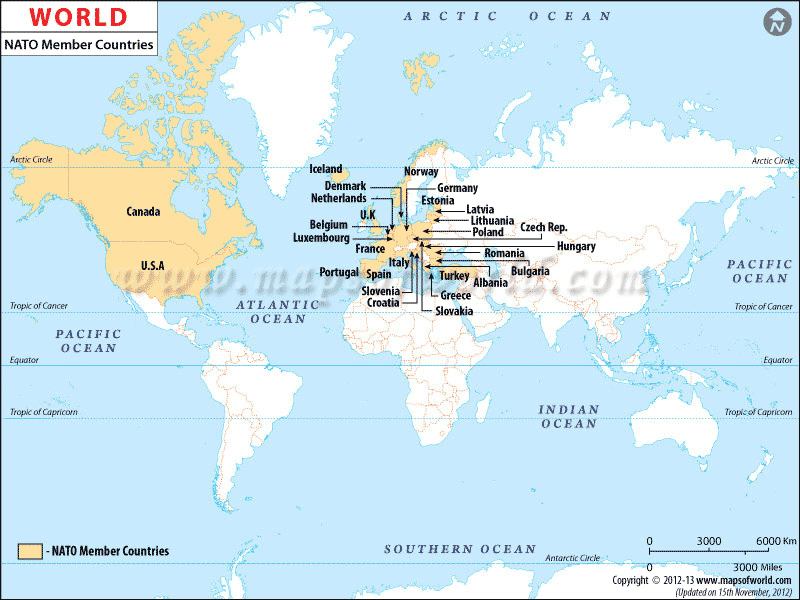
At NATO and SHAPE (NATO's military base) I learned that Austria is not a member of NATO (who knew?), they are redesigning their "Strategic Conept" (military speak for mission statement), and that NATO has a gift shop- where I bought Andrew's birthday present-, but I was most interested by how different the atmosphere was in these places compared to how it was in the government buildings. The government buildings were very open and mostly glass to emphasize transparency, but here the architecture was very rectangular and boxed in. The people who led the briefings were completely different in the demeanor and language, too. At the governmental institutions we had talked to a lot of diplomats who had long and fluffy answers for most questions, but at NATO and SHAPE answers were direct and were delivered in bullet points. I have to say that SHAPE fed us one of the best lunches of the week, though.
And for those of you who are curious, here are the NATO member states:

I didn't take many pictures because we were told that cameras weren't allowed in the buildings we visited during the week.

On our last day we had a little extra free time so Gergely and I went to the Bozar art museum to see an exhibit on Frida Khalo. We both liked this painting the best:  
It made sense that we would like it the best because the description said that it was one of her early, European-influenced paintings. So to keep from being too Euro-centric (I'm interested in other parts of the world, really!) I'll post another painting that I liked, which is a self-portrait of Kahlo portraying herself at St. Stephen and showing her body supported by a brace she had to wear after a bus accident and the crumbling pillar within her. 


Brussels is a little rough around the edges (Let's Go warned that girls should beware of super-aggressive men) but I really like the city. It feels really alive and there are lots of fun sights, like the cathedral and the Mannekin Pis. Had I not been to Brussels two years ago with Catherine I would have been really disappointed that I didn't get to see more of the city because there are lots of fun sights, like the cathedral and the Mannekin Pis. 
But luckily I have lots of fond memories like this, when Catherine (wearing my clothes because her luggage was MIA) and I went to the brewery museum that looked like a spaceship and got in free because the door was unlocked and no one seemed to be working. How could you not enjoy a city with good beer, great chocolate, awesome waffles, and unsupervised museums?


Saturday, March 13, 2010

The Jig Is Up

I returned from Belgium to find the streets of Graz snow-free and the skies a rare color called "blue." I thought Spring had come and was looking forward to putting away my wool socks and turning down the radiator.

Unfortunately, today I woke up to this:

It's snowed a lot this year. There was a constant layer covering the ground from December to January that varied in depth from about an inch to upwards of one to two feet. And yet every time it snows, including today, the people of Graz act totally surprised.

I don't like snow. It's cold, it gets dirty really quickly, and it's hard to walk through. Part of the reason Graz sounded so appealing to me when I was filling out my Fulbright application was because I heard that it had a milder climate and thus less snow than the rest of Austria.

So, the first few times the Grazers acted surprised to have snow, I believed them and was surprised right along with them. But after the fourth or fifth time I stopped believing them when they said, "This never happens!"

Actually Graz, it does happen. A lot. I was here a few weeks ago when it happened. And I was listening then when you pretended it never happens. And the time before that. And the time before that too. Let's all just admit that it snows in Austria. I doubt that the rest of the world is surprised to hear this.

Friday, March 12, 2010

Budapest: How I Learned to Be More Patient

To balance Joel's stay in the former Austro-Hungarian Empire we spent a few days in Budapest. Rick Steves had nothing but good things to say for the city so I obviously had high hopes for it.

But it turns out that all the Rick Steves Podcasts available on iTunes couldn't help the fact that I didn't know how things worked in Budapest. I had assumed that because it was so close to Vienna (2 1/2 hours by train) that it wouldn't be that different from Austria (in my mind I guess I really skimmed over that whole "Communist Era" "Iron Curtain" thing. Oops). I really need to stop assuming.

Our rides on the Metro (which is the second-oldest in the world and was originally horse-drawn) are a perfect example of how confused we were for much of the trip. I read something about stamping your ticket every time you switched lines, but we weren't sure where to do this and there were police EVERYWHERE checking tickets. This wouldn't have been such a big deal in Austria, where you only have to stamp a ticket once and you probably won't be checked for one anyway. (A Fulbrighter whose dad works for the state department said that an excess of police, bureaucrats, and government officials is a left-over of communism. I think the metro cars are too, as I can only describe them as the Trabis of subways). 
Budapest was fascinating and new and different, but the "different"  part took me by surprise. I had my list of things I wanted to see and got frustrated when I couldn't check them off as quickly as I wanted to.  I didn't know the Hungarian name for anything and we were always getting lost. The things we did do and see, and even getting lost along the way, all turned out to be great experiences, though. So to recount our trip to Budapest I think a little game of High-Low is in order.

High: We made it to Budapest in one piece.

Low: We got lost on the way from the train station to the first hostel we stayed in. A recurring theme.

High: The hostel turned out to be awesome. It was a converted private apartment and the people that worked there were so nice. It had a really homey feel and lots of nice touches- like comfortable beds, a room full of computers that we could use for free, friendly guests, and a staff that made coffee with the espresso machine for each of us individually in the morning.  So, I recommend staying at the Goat Hostel in Budapest.
Low: The first night we went up to the Castle Hill on the Buda side. Every where we turned there were cool things to see, like this archway and fountain, but what we really wanted was to find a place to eat. We couldn't. We tried to go to one of the museums to I could see the Hungarian Impressionists collection. It was closed. The castle is huge. We got lost. I was hungry and cranky. 
High: It turned out that we just hadn't walked far enough and eventually found a cheap cafe where we inhaled ham and cheese sandwiches (if you eat it fast enough it doesn't even taste like ham!). Then some nice people took a picture of us overlooking the Danube and we enjoyed the view of the Chain Bridge and Parliament.
Another high: Later we went to a place called Faust Wine Cellar in the Dominican Cloisters, which are in the basement of the Hilton (seriously). We decided to splurge and go on a "wine tour", which meant we each tasted 5 wines, had bread and cheese, and was awesome. 
We were the only customers and the man who worked there was really eager to please us. Seriously eager. He kept mentioning his fiance's family, and Joel's theory is that he came from a peasant family up the hills, wants to marry the girl whose parents own the cellar, and working there is his one chance to impress them. When I asked where a certain wine came from he ran and got a giant map. When I grabbed a blanket (which they provided because it's cold in cloisters) he offered me a few more. We each tried Palinka, which a Hungarian wine brandy, and Bukavir, which is a wine that translates to "bull's blood" and is supposed to make you strong. And we got to KEEP the wine list. On the way back to the hostel we stopped at the Matthias Church which, like the cathedral in Graz is a mismatch of styles, but way cooler looking because it's a mixture of Gothic and Turkish architecture (it's been both a mosque and a church). One of the minarets is in this picture.

Low: The next day we switched hostels because I found one that was cheaper. We should never have done this. The hostel itself was nice enough (although weird... there were teepees over a lot of the beds...) and the man who worked there showed that same eagerness to please when he gave us a welcome drink (more palinka!) and offered us various coupons, but things got strange when he said that the woman who would take us to our room would be there soon. I told him that we could just walk down the hall to our room ourselves, but when a Hungarian woman carrying a huge bag of oranges showed up and told us to follow her we realized our room was some where else.

The room, which the man at the hostel marked on a map and told us was "10 minutes away, 10 minutes away," turned out to be a private apartment 20 minutes away. The lady with the oranges left us with the keys and the inexplicable plea to not turn the radiator up to 7, "Never 7! Never 7!" 
High: We went out and explored Budapest for a while. After a picnic lunch where we enjoyed the fact that you can drink beer in public in Europe, we went to Szent István-bazilika (St. Stephen's Basilica). It's beautiful. It's also home to the right hand of King Stephen, the first King of Hungary and the man who Christianized much of it. We paid 200 Florints or something to see it lit up. We also stopped by Parliament, which is a really pretty neo-Gothic building.
Low: We decided to go back to the apartment. We used the map the man at the hostel had given us, but after about 10 minutes of walking around the marked area realized he had just drawn a red "x" on a random spot. To say that we were lost is an understatement, but by some miracle after about an hour we found the apartment and sat down to rest for a while.
This was when we discovered how weird the apartment really was. The oven had no door. The water heater was in the shower exposed a flame that would roar when the hot water was turned on. A tiny shower curtain in the shower covered not a soap dish, but, 

wait for it... 

a CIRCUIT BREAKER BOX.
Is there a worse place for one of those? 

High: We went to the thermal baths at Szechenyi. Although it was really confusing at first and we couldn't tell if we had no idea what we paid for or what we were doing, the baths turned out to be really relaxing and fun. I love water and I love being warm, so the baths provided the perfect combination. Hungary has lots of hot springs and people go to the baths to relax and socialize. Szechenyi is supposedly the biggest and nicest of the baths with lots of pools at different temperatures. There were floating chess boards and a circular pool with a really quick current that swept groups of kids (and me and Joel) around in circles. The indoor pools were nice, but we spent most of our time outside. It's not often you can sit in an outdoor pool in February.

On the way back to the apartment we stopped by Hero's Square, where all the statues depict Hungarian heroes and I took a picture of Joel that's blurry but I really like. It's too bad he's not Hungarian, it looks like he's discovering his Magyar roots.

Low: We went to the grocery store to buy dinner. This should have been simple. We should have bought our food and walked right out, but I decided to go find salad dressing and more food to because lately I've been plagued by the irrational fear that I won't get enough to eat. I left Joel holding a bottle of wine, salad, cheese, lunch meat, and a loaf of bread and standing next to the only decipherable sign we saw in Hungarian, which said something like "No alcohol sales after 11 PM." It was about 10:30, and there was a short, chubby man with a thick mustache and a uniform there to enforce the rule (Joel has since named him "Mario."). While I was gone Mario started pointing at the wine, the sign, and Joel in succession. Joel nodded his head over and over, but Mario didn't get the message and started poking him. I came back right as Joel dropped the bottle of wine and it shattered on the floor, which really upset Mario. He didn't speak English or German, but luckily there was a young guy there who spoke English and offered to help us explain that we would pay for the wine and get out of there as soon as possible. So we paid and fled the scene.

High: On our way back to Graz the next day we sat in the restaurant car and had a few beers. We rode through little villages and decompressed.
 
I didn't check off all the things I wanted to do on my list, but there were definitely more highs than lows. I'd be painting an incomplete picture of our experiences in Budapest if I didn't include characters like Mario, shower breaker boxes, and hostel workers who can't read maps, and from now on I'll probably not need to stick to my lists as much. But of course I'll still make them.